Canister load cell mounting caps and cups
Upper and lower receiver cups, anti-rotation hardware and debris boots selected around the exact rocker column geometry. Buy as a separate spare kit or a complete fleet.
Review load cell configurationSource paired upper and lower receiver cups, anti-rotation pins, spherical buttons and debris boots for a defined canister load cell assembly.
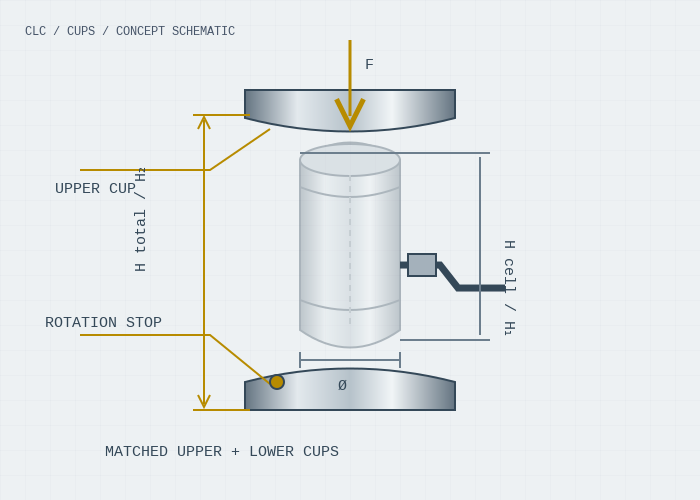
A rocker column needs the load-introduction hardware specified for its end geometry. A generic flat plate is not a substitute for the designed receiver cup. Record cylinder diameter, both end radii, cup contact geometry and the complete upper-to-lower mounting height. Equal bare-cell height alone does not establish a drop-in fit.
Where the design uses a retention pin or rotation stop, verify engagement and available movement against the approved assembly drawing. Different brands use different arrangements. A debris boot helps exclude dirt but must not create an unintended force shunt or trap water around the sensor.
Specify support count, vessel dead weight, product weight, thermal growth, agitator forces, piping loads, wind and seismic requirements. A complete module may need anti-lift restraints, lateral stops and maintenance jacking provisions. Cup hardness, material and heat treatment follow the approved design rather than a universal hardness claim.
Upper and lower receiver cups, anti-rotation hardware and debris boots selected around the exact rocker column geometry. Buy as a separate spare kit or a complete fleet.
Review load cell configurationStandalone cup enquiries are welcome, subject to drawing qualification and any minimum machining batch. Send the existing cell model, capacity, cup drawing or clear dimensioned photographs, quantities and total seated height. Hardware compatibility remains drawing-specific.