15–100 t
Analog rocker column load cells
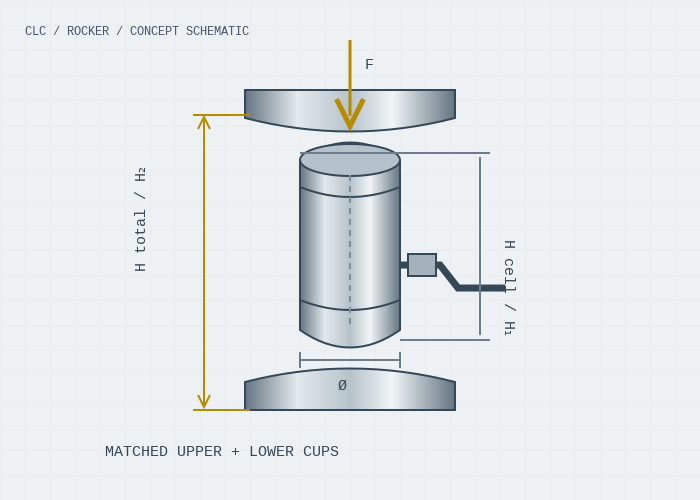
Self-restoring compression columns with a matched upper and lower cup interface. Specify seated height, rated output and cable construction before choosing a fleet.
Review load cell configurationSpecify analog or digital canister load cell fleets by seated height, signal, deck movement and mounting hardware.
Enquiry capacities include 15, 20, 30, 40, 50, 60 and 100 t per column. Ask for a column alloy steel load cell or a 17-4PH stainless option with model-specific evidence. Truck and rail decks move with braking, thermal expansion and uneven wheel loading. Rounded column ends work with the correct cups to generate a restoring action. The approved assembly defines travel, tilt limits, check rods, end stops and anti-lift provisions; self-restoring cells do not remove the need to engineer these restraints.
An analog fleet needs compatible rated output, resistance, excitation and corner-trimming equipment. Digital columns can expose individual readings and simplify service with a compatible indicator. RS485 and CAN describe interfaces, not universal protocols. Digital output alone does not guarantee fraud prevention or immunity to tampering.
Request a model-specific hermetic weld, material and IP test basis. IP68 immersion conditions and IP69K washdown ratings are separate checks. GDT surge protection, a surge junction box, bonding, earthing and cable routing form a coordinated protection system. Braided cable can improve mechanical protection; specify glands and the actual rodent exposure.
Self-restoring compression columns with a matched upper and lower cup interface. Specify seated height, rated output and cable construction before choosing a fleet.
Review load cell configuration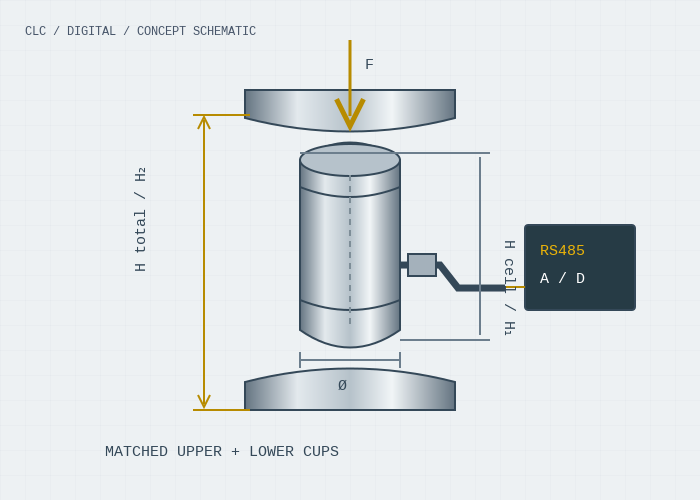
Request individually addressable columns for corner adjustment, diagnostic visibility and digital weighbridge integration. Protocol compatibility is part of the specification.
Review load cell configurationIt is an enquiry configuration, not a structural approval. Include deck dead load, gross load, unequal load distribution, impact, overload factors, supports and local weighing rules. The most heavily loaded cell governs.
Only after checking the exact protocol, addressing, power supply, termination, firmware and calibration tools. An RS485 connector does not establish interoperability.
Original-manufacturer and metrology references explain the engineering principles. They do not certify a CLC configuration.
Self-restoring column design, model-specific dimensions and surge-arrestor features. Refer to the exact capacity and drawing revision.
Self-restoring rocker pins, rotation stop, capacity and protection variants; these are original-manufacturer specifications.
Load introduction and restoring geometry; assembly design still governs lateral restraint.
ASTM E74 and ISO 376 instrument-calibration methods; a five-point test alone does not establish compliance.